

Restaurants · Retrospective
Coffeehouse sales and the limits of a brand-wide result
Starbucks' January release reported a return to U.S. comparable transaction growth. Reading the result alongside the company's property footprint illustrates why brand performance and a particular location's circumstances require different evidence.

Read the reporting period before the headline
Starbucks released its first-quarter fiscal 2026 results on January 28, covering the 13 weeks ended December 28, 2025. The company highlighted its first U.S. comparable transaction growth in eight quarters. Its quarterly filing reported a 4% increase in North American comparable store sales, with comparable transactions up 3% and average ticket up 1%.
The fiscal label and the calendar period are both relevant. These were results published in January about a period that had already ended. They were not a reading of activity through the end of January, and the regional comparable figures were not the performance of every property carrying the brand. A useful research summary retains those qualifications beside the result.
Understand which premises are being researched
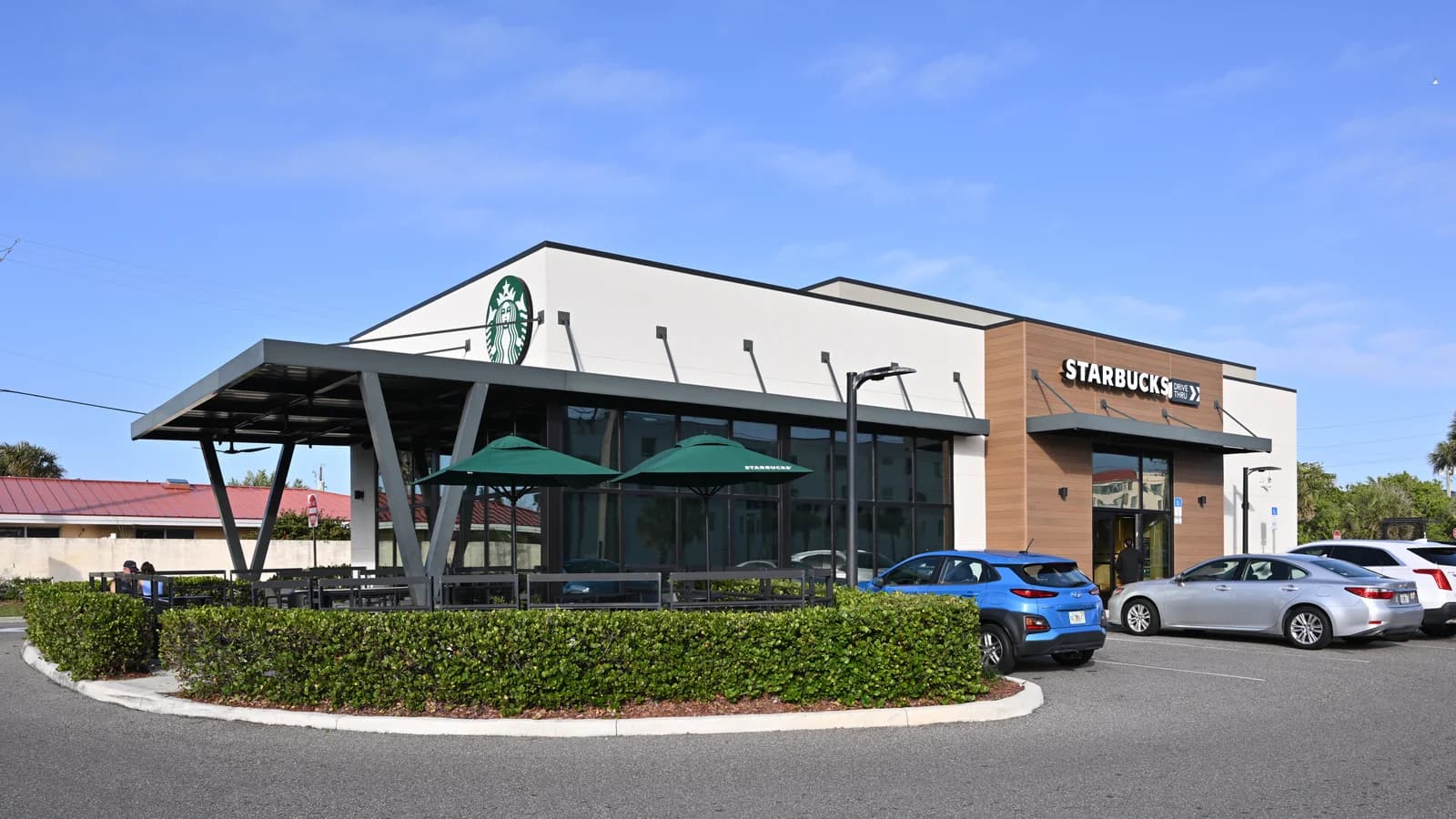
A coffeehouse can occupy a freestanding site, part of a shopping center or a space within another business. Before seeking an owner conversation, research needs to establish which physical premises and property interest are relevant. A street address may identify a broader parcel containing several occupants rather than a separately transferable coffeehouse property.
The operating relationship also deserves its own record. Starbucks' filing distinguishes company-operated and licensed stores. That distinction should not be collapsed into a statement about the landlord or the named tenant at an individual location. A brand sign, store directory or reported sales trend cannot establish the parties to a lease. Those details require a property-specific source and, where necessary, professional document review.
Describe access and customer use without guessing demand
For an initial site description, useful observations include the entrance, seating configuration, any drive-through or pickup arrangement, nearby uses and the relationship to shared parking. These features help a reader understand the type of property under discussion. They should be described as dated observations, especially where the available imagery or directory may predate changes at the location.
A busy period observed at one shop does not demonstrate its annual sales, and a quiet visit does not establish underperformance. The national or regional result cannot fill that gap. If operating information becomes relevant to a transaction, the parties and their professionals can determine what records are appropriate and how they may be shared. An introductory property inquiry need not demand confidential store-level information.
Connect the news to a precise research question
The January release offered a reason to examine how operating measures are reported, not a reason to assume that an owner would sell or a tenant would renew. A better question is whether the property record is sufficiently clear to support a relevant conversation: the correct parcel, the ownership entity, the premises involved and the appropriate contact.
An owner can then explain whether timing, a lease question or a broader portfolio matter warrants further discussion. The resulting introduction should identify the premises and the subject the owner has agreed to discuss. It should also preserve any uncertainty about operating or contractual information. That is a more useful starting point for a transaction professional than an assumption that a regional sales result describes the property in question.
Sources & editorial note
- Starbucks: First-quarter fiscal 2026 announcement, January 28, 2026
- Starbucks: Form 10-Q for the quarter ended December 28, 2025
Historical reference date: . This article is original retrospective commentary published on September 27, 2026. The property-research observations are JBI’s interpretation, rather than findings reported by the cited organizations. Sources, estimates and forecasts may have been revised since the period discussed.
General information only; not legal, tax, valuation or investment advice. References to companies and properties do not represent clients, transactions, affiliation or endorsement. Read our disclosures.