

Convenience retail · Retrospective
Lower fuel prices do not tell the whole convenience-property story
A national pump-price forecast describes an expected market price. It does not establish a station’s fuel volume, operating margin or property value.

A forecast, not a completed result
In its September 9, 2025 release, the Energy Information Administration forecast an average U.S. regular gasoline price of about $3.10 per gallon for 2025 and $2.90 for 2026. EIA also expected gasoline spending to account for less than 2% of personal disposable income in 2025. These were expectations published that September, not observed full-year outcomes or current forecasts.
For convenience-property research, the distinction between a price forecast and business performance is essential. A national expected average does not identify the price at a particular station, the number of gallons it sells or the economics of its operator. The release provided market context while leaving those local questions unanswered.
Dollar sales combine price and volume
A simple hypothetical illustrates the measurement problem. If a station sold the same number of gallons at a lower retail price, its gross fuel receipts would fall even though gallon volume was unchanged. That arithmetic does not describe any particular station in 2025. It explains why a change in fuel revenue cannot be interpreted as a change in customer demand without examining the underlying quantities and prices.
Gross receipts also do not establish operating profit. Purchase costs and other expenses are separate information. A researcher who has only sales totals should state that limitation instead of treating the totals as a complete account of the business. The same discipline applies when an operator combines fuel, food and other merchandise within a single reported number.
The location has several functions
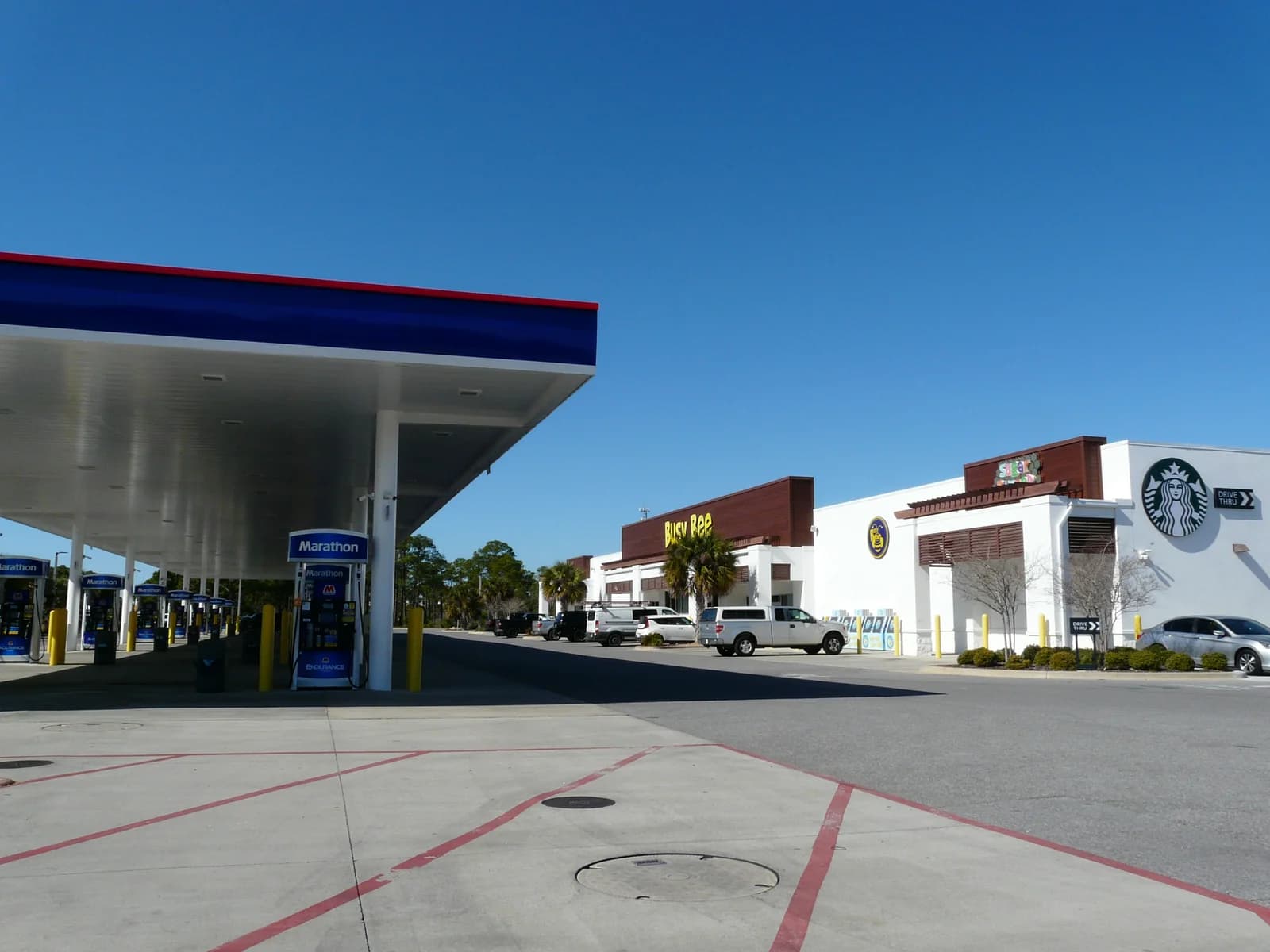
A convenience property can serve different customer purposes, and the actual mix should be verified. A location may support refueling, prepared-food purchases or other short visits. Access, vehicle circulation and the arrangement of the store matter to those uses. A forecast of national gasoline prices does not reveal which function is most important at a given address.
Comparisons between sites therefore need more than a shared sign or fuel brand. A travel-oriented location and a neighborhood convenience store may have different physical characteristics and customer patterns. Those differences are subjects for research, not assumptions about superior performance. Observed traffic, operator statements and documentary information should remain distinguishable in the property record.
The property inquiry extends beyond the forecourt
The real estate record has its own questions: ownership, the named occupant, site boundaries, improvements and the documents governing their use. Equipment and environmental matters require appropriate specialist attention where relevant. A general property researcher can identify missing records and the need for that review without certifying a site’s condition or interpreting technical findings.
The September forecast was most useful when retained as one dated source among those separate inquiries. It offered an expected national price path, not a promise of lower local costs, stronger margins or a particular transaction outcome. An owner’s intentions and an investor’s criteria still required direct confirmation. None of those questions could be answered by applying the national forecast mechanically to a convenience property.
Sources & editorial note
Historical reference date: . This article is original retrospective commentary published on September 27, 2026. The property-research observations are JBI’s interpretation, rather than findings reported by the cited organizations. Sources, estimates and forecasts may have been revised since the period discussed.
General information only; not legal, tax, valuation or investment advice. References to companies and properties do not represent clients, transactions, affiliation or endorsement. Read our disclosures.